Supply Chain Course vs Logistics Course: What to Choose?
Choosing between a Supply Chain Management Course and a logistics course is a common confusion, especially if you are exploring logistics courses after 12th or planning your first step into logistics management. The simple way to look at it is this: logistics is one part of the bigger supply chain picture. Supply chain management sets the strategy and coordinates the full flow from sourcing to delivery, while logistics focuses on storage, movement, and delivery execution.
This blog breaks down what each course covers, the tools you learn, the jobs you can target, and how to choose based on your career goals.
What is a supply chain course?
A Supply Chain Course teaches you how the full supply network works end to end. That includes planning demand, buying raw materials, coordinating suppliers, managing inventory, working with production, and ensuring delivery meets service and cost targets.
In short, supply chain management covers a wider range of activities, including planning, sourcing, producing, and delivering goods and services while ensuring efficiency, visibility, and seamless coordination across the entire value chain.
What is a logistics course?
A logistics course is more execution-focused. You learn how goods move through warehouses, transport lanes, and delivery networks. It is the operational engine that keeps movement stable, cost-controlled, and on time.
Logistics is a key part of the supply chain, but it is one component within the broader supply chain management system.
If you are considering a shipping and logistics course, you will typically see more focus on documentation flow, freight operations, and movement coordination.
Key differences between supply chain and logistics courses
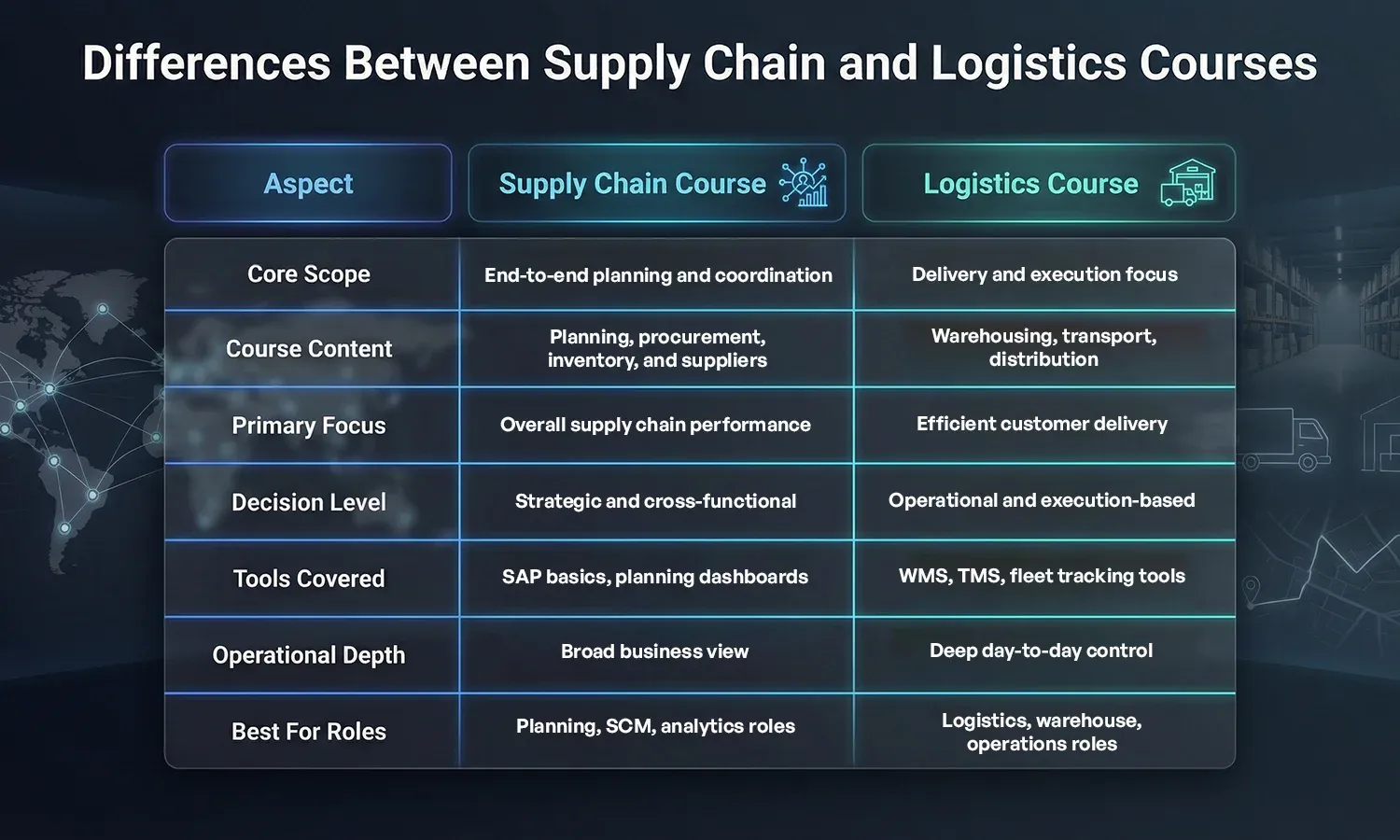
Course content
- Supply chain course: planning, procurement, inventory strategy, supplier coordination, network decisions, and performance improvement.
- Logistics course: warehousing, transportation planning, distribution execution, delivery performance, and handling exceptions.
NetSuite explains it clearly: supply chain management drives the broader performance and coordination, while logistics focuses on efficient and cost-effective delivery to the customer.
Focus areas
- Supply chain: end-to-end flow and decision-making across functions
- Logistics: movement, storage, and delivery execution discipline
Tools taught (SAP, WMS, TMS)
Both paths can include tools, but the depth differs:
- Supply chain course: SAP basics (especially procurement and inventory modules), planning dashboards, performance metrics
- Logistics course: WMS, TMS, fleet tracking, warehouse process tools
Depth of operations vs full supply chain view
- Supply chain is broader and more cross-functional
- Logistics is deeper in day-to-day movement and operational control
Skills you gain in each course
Skills from a Supply Chain Management Course
- Demand Planning Basics
- supplier and procurement coordination
- inventory planning and control logic
- process improvement mindset
- decision-making using cost and service trade-offs
Skills from logistics courses
- warehouse execution and order flow
- transport coordination and delivery performance
- documentation handling and exception control
- time discipline, accuracy, and customer coordination
Job opportunities after each course
Supply chain course jobs
If you choose a supply chain course, common starting roles include:
- Supply Chain Analyst
- Demand Planner
- Procurement Executive
- Operations Coordinator
These roles suit people who like planning, coordination, and improving how systems run.
Logistics course jobs
If you choose a logistics course, common starting roles include:
- Logistics Coordinator
- Warehouse Executive
- Freight and Transport Executive
- Distribution Associate
If you are aiming for freight-side operations, pairing your learning with a Freight forwarding course can also help, because it strengthens trade documentation and shipment coordination skills.
How to choose the right course for your career
A practical way to decide is to match the course to the work you want to do in the first 12–18 months.
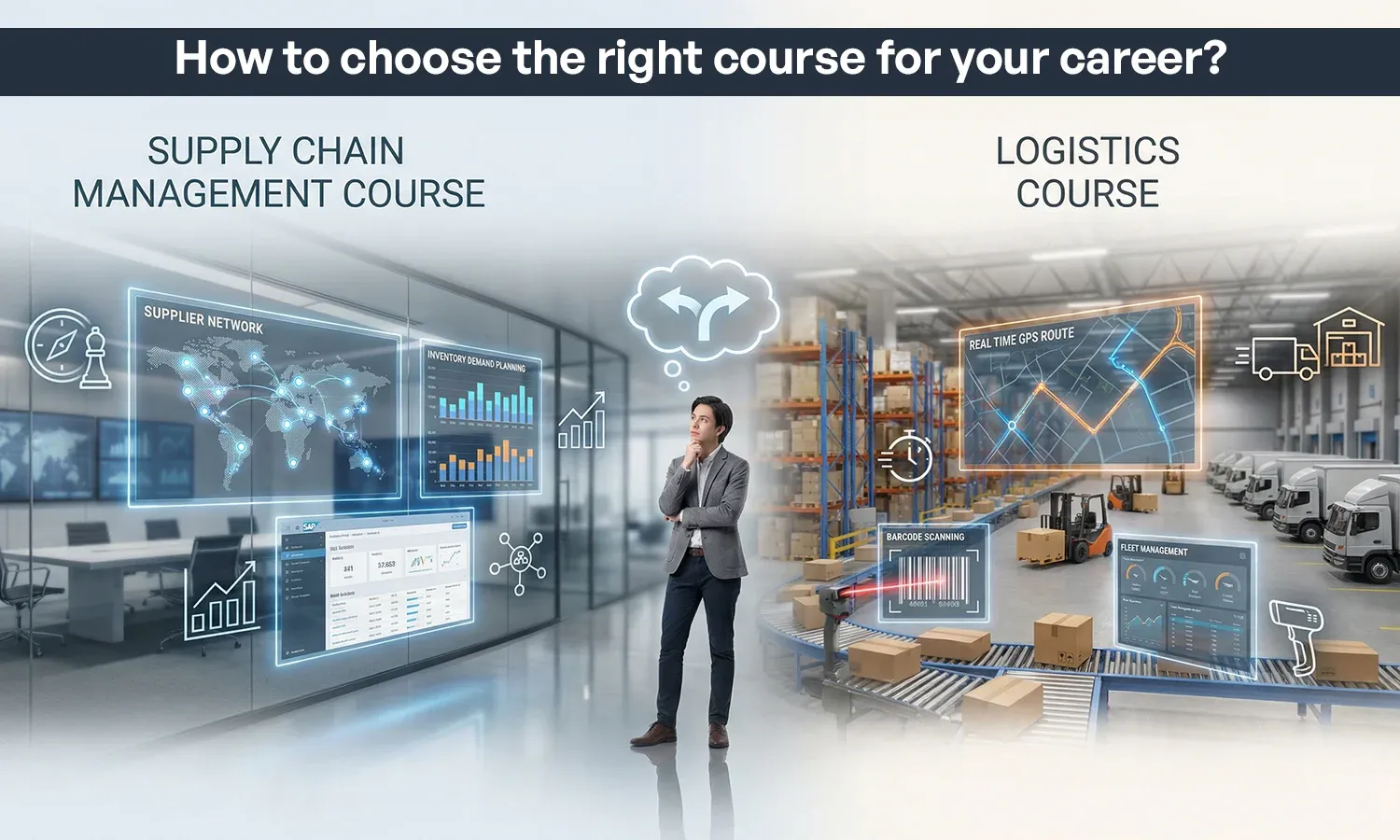
Choose a supply chain course if you want:
- planning-linked roles
- procurement and supplier coordination
- inventory strategy and end-to-end control
Choose a logistics course if you want:
- warehouse and transport execution roles
- shipment coordination and delivery performance
- operational responsibility early in your career
Also keep in mind: many professionals start in logistics execution and later move into supply chain planning. That progression is common because execution builds strong operational grounding.
Tools and certifications that improve each career path
For supply chain growth, employers often value structured learning that improves planning depth. Common options include SAP MM and globally recognised certifications like CSCP.
For logistics growth, WMS exposure, CLTD-style logistics learning, and warehouse execution skills help you grow faster into supervision and planning-linked operations roles.
Conclusion
A supply chain course is the better choice if you want a broader end-to-end view with planning, procurement, and coordination. A logistics course is the better choice if you want hands-on execution in warehousing, transport, and distribution. Both are strong career paths, and both can lead to leadership roles as you grow from operational tasks to strategic decision-making.
If you want structured, job-linked learning that stays industry practical, Transworld Academy can help you choose the right track and build role-ready skills for both logistics and supply chain management careers.